
Storm Damage Recovery for Edmonton Homes: What to Do After Wind, Hail & Fallen Trees

This year, Edmonton homeowners have experienced a seemingly endless wave of severe thunderstorms capable of producing damaging winds, large hail, heavy rain, and even tornado-strength gusts. While the storms may only last a few minutes, the damage they leave behind can affect your property for weeks—or even months.
Broken trees, damaged roofs, destroyed sheds, flooded yards, and compromised structures all require careful assessment before repairs begin.
At Obsidian Birch, we help Edmonton homeowners recover from storm damage by providing professional tree services, emergency hazard removal, and custom carpentry repairs—allowing many homeowners to work with a single trusted contractor instead of coordinating multiple companies.
What Types of Storm Damage Are Common in Edmonton?
Edmonton's climate creates a unique combination of storm hazards throughout the year.
Common types of storm damage include:
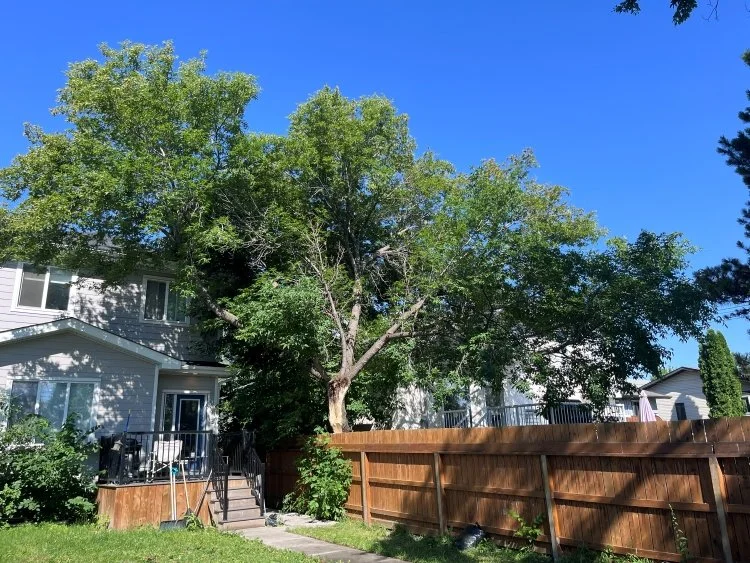
Fallen or uprooted trees
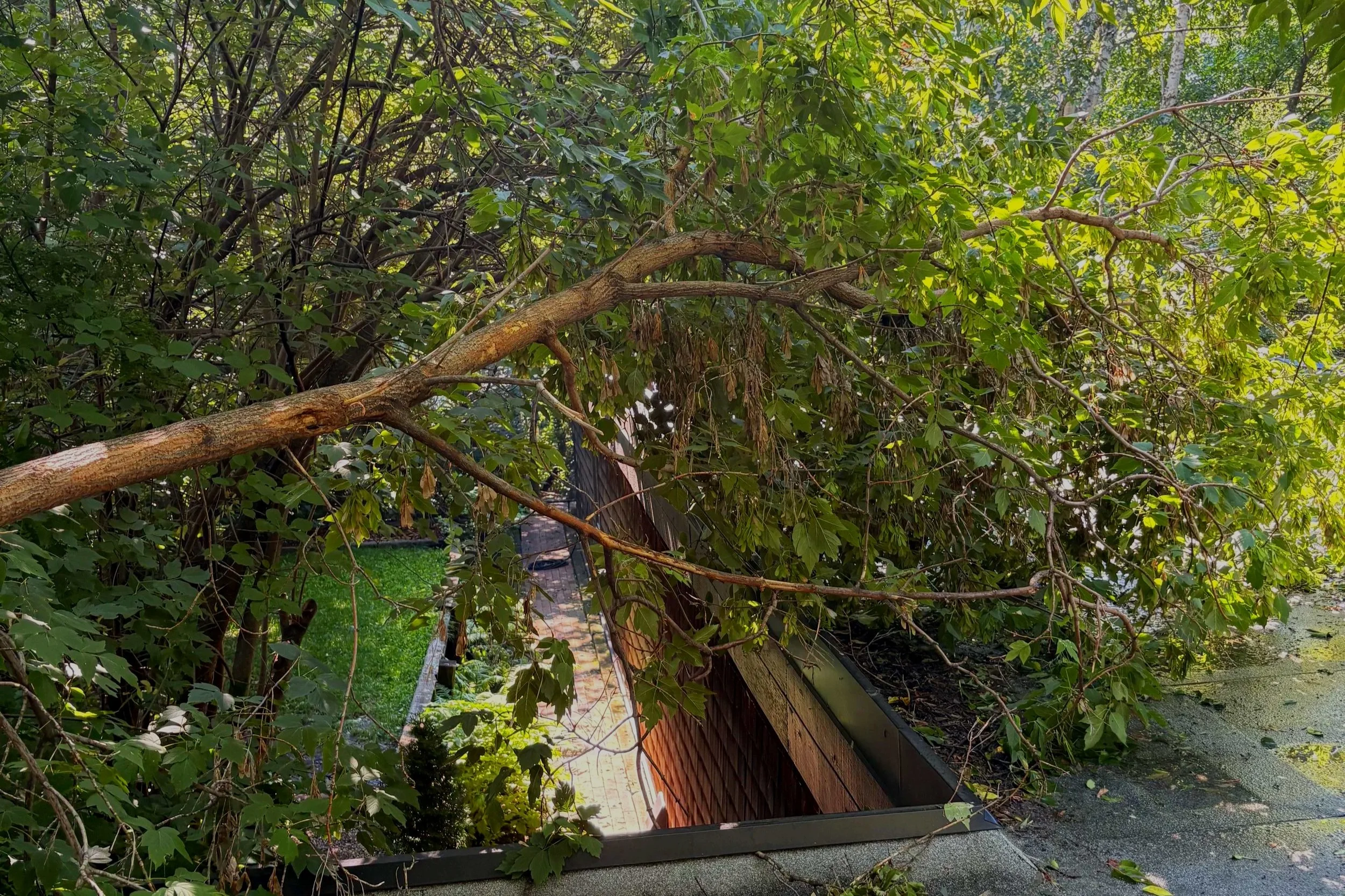
Broken limbs hanging over homes
Split trunks and cracked stems
House damage from falling branches
Damaged decks and fences
Broken sheds and outbuildings
Leaning trees
Soil erosion around root systems
Even storms that appear relatively minor can weaken trees enough that they become hazardous months later.
Step 1: Make Safety Your First Priority
After any severe storm, assume hidden hazards may exist.
Do not:
Walk beneath hanging limbs
Attempt to move large trees yourself
Climb onto your roof
Operate a chainsaw near damaged trees under tension
Touch branches contacting power lines
Instead:
Keep children and pets away from damaged areas.
Photograph damage from a safe location.
Contact your utility provider immediately if power lines are involved.
Arrange a professional inspection before cleanup begins.
Storm-damaged trees can contain tremendous stored energy, making them among the most dangerous situations homeowners encounter.
Step 2: Document Everything for Insurance
Before cleanup begins, thoroughly document the damage.
Take photographs of:
Every damaged tree
Roof impacts
Fence damage
Deck damage
Siding
Landscaping
Vehicles
Outdoor structures
If possible, photograph the entire property before removing debris.
Your insurance company may request:
Date of loss
Storm details
Photos
Repair estimates
Arborist assessment (when trees are involved)
Keeping organized documentation can help streamline the claims process.
Step 3: Have Trees Professionally Assessed
Not every damaged tree needs removal.
A qualified arborist can determine whether a tree:
Is likely to recover with structural pruning
Could benefit from cabling or bracing
Has sustained irreversible trunk failure
Has dangerous root damage
Should be removed immediately
Many trees that appear healthy immediately after a storm begin declining months later because internal damage isn't always visible from the outside. Early assessment often saves homeowners money while preserving mature trees whenever possible.
Need an On-Site Assessment?
📍 Contact us to book a free site assessment
📞 Call or text us us at 780-937-6369
Signs a Storm-Damaged Tree May Need Removal
Watch for:
Split trunk
Cracks extending into the main stem
Leaning that wasn't present before
Exposed roots
Uprooting
Broken leader
Large hanging limbs
Significant canopy loss
Fresh fungal growth after damage
Soil lifting around the base
Any of these conditions should be inspected promptly.
Storm Cleanup Isn't Just About Trees
Many homeowners are surprised to learn that once the tree has been removed, additional repairs are often required. Storm damage commonly affects:
Decks. Falling limbs frequently crack deck framing, damage railings, or loosen posts.
Sheds & Outbuildings. Trees often fall onto sheds, pergolas, and gazebos damaging even the soundest of structures.
Working with a contractor capable of handling both tree work and carpentry can significantly simplify the recovery process.
Why Combining Tree Services & Carpentry Saves Time
After storm damage, many homeowners end up coordinating multiple professionals to come in and restore their property. Scheduling trades separately can delay repairs and increase costs.
Because Obsidian Birch offers both professional tree services and custom carpentry, we can often manage multiple aspects of the recovery process with one coordinated plan.
This means fewer contractors on your property, faster communication, and a smoother path from emergency cleanup to completed repairs.
Can Storm-Damaged Trees Be Saved?
Yes—many can.
Trees have remarkable recovery abilities when:
Less than approximately 25% of the canopy is lost
Root systems remain stable
The trunk has not split through the main stem
Structural pruning is performed correctly
However, trees with extensive trunk failure or root damage often become long-term hazards. A professional assessment helps determine the safest and most cost-effective option.
Preventing Future Storm Damage
Although no property can be completely storm-proof, proactive maintenance significantly reduces risk.
Regular tree pruning can:
Remove weak limbs
Improve canopy structure
Reduce wind resistance
Eliminate deadwood
Improve tree health
Homeowners should also:
Inspect decks annually
Secure outdoor structures
Remove hazardous trees before severe weather arrives
Schedule routine arborist inspections for mature trees
Preventive maintenance is almost always less expensive than emergency repairs.
Why Edmonton Homeowners Choose Obsidian Birch
Storm recovery requires more than simply cutting up fallen trees. Our team combines skilled arboriculture with custom carpentry, allowing homeowners to restore their property efficiently while maintaining the beauty, safety, and value of their home.
Whether you need emergency tree removal, structural pruning, deck repairs, or rebuilding outdoor features damaged by severe weather, we provide practical solutions tailored to your property.
Frequently Asked Questions
-
Not always. Some trees can recover with proper pruning or support. However, trees with structural failure, root damage, or major trunk splits may require removal.
-
Trees do not heal like humans. They compartmentalize damage and grow around injuries, but significant trunk cracks can remain structural weaknesses.
-
Coverage varies. Many policies focus on damage caused by fallen trees rather than preventive removal or tree maintenance. Always confirm with your insurer.
-
Sometimes. Cabling or bracing may help stabilize certain trees, but severe splits may make removal the safer option.
-
If it threatens structures, blocks access, or remains unstable, it should be addressed quickly.
-
Large spruce trees can be vulnerable because of their size, crown structure, and root characteristics, especially in exposed locations. However, just because it is a spruce tree doesn’t automatically make it a threat.
-
Yes. While hail damage is often cosmetic, severe hail can:
Strip leaves
Damage bark
Break branches
Create entry points for disease
-
Keep people away from the area and contact a professional tree service experienced with emergency removals.
Looking for answers to other burning questions? Check out our FAQs page.
Recover Faster After Edmonton Storms
Storm damage can feel overwhelming, but the right response can make all the difference. By prioritizing safety, documenting damage, arranging professional tree assessments, and repairing affected structures promptly, homeowners can protect both their investment and their family's safety.
If you have a property in Edmonton or in a surrounding community that has been affected by severe weather, Obsidian Birch is here to help.
Keep yourself and your family safe this storm season!
📩 Request an Estimate
📍 Book an On-Site Assessment
📞 Call or text us us at 780-937-6369